How can we teach children to get along with one another?
Learning to live together is about more than just saying hello, sharing toys, or following the rules of community life. It means learning to acknowledge the existence of others, to take their needs into account, to cooperate with people who are different from oneself, and to navigate disagreements without breaking off communication. These are all skills that are developed gradually, starting in childhood.
But how can we pass on these lessons? Simply talking about respect, tolerance, or solidarity isn’t enough. Children also learn by observing adults, participating in daily life, and experiencing human relationships. At home, at school, in their neighborhood, or through interactions with other generations and cultures—every situation can become an opportunity to learn how to live together as a society.
Educating people about living together, then, is less about teaching grand principles and more about creating the conditions to put them into practice. After all, learning to live in society often begins with very simple actions that any adult can do.
Why do we learn to live together starting in childhood?
Living together isn't just about sharing a space, following the rules of politeness, or avoiding conflict. It's about learning to find your place within a group while recognizing the place of others. It's also about understanding that everyone has their own story, opinions, needs, and way of seeing the world—and that these differences don't prevent us from building something together.
This learning begins in early childhood, through everyday interactions:
wait your turn;
listen to a classmate;
accept that another child may not want to play;
seek a common solution, etc.
All of these experiences gradually help us move beyond our own perspective.
These situations call upon essential psychosocial skills: empathy, the ability to express emotions, to communicate, to cooperate, and to think critically. According to the Scientific Council for National Education (CSEN), developing these skills contributes to social skills, self-regulation, and self-esteem. Moreover, these skills are not limited to relationships among students; they play a role in all social interactions—at school, within the family, and in society.
But learning to live together does not mean learning to always agree. It also means knowing how to stand up for one's beliefs, listen to the views of others, and accept that disagreements can exist without hindering dialogue.
The philosopher Hannah Arendt regarded human diversity as a fundamental condition of political life: we share the same world, yet we are not identical. Learning to live together, therefore, does not mean erasing our differences, but discovering how to build something in common based on them.
Adults Leading by Example: How Can We Show Rather Than Tell?
Children learn a great deal by observing the adults around them. Our words matter, but our actions sometimes convey much more powerful messages. How can we ask a child to respect others if we ourselves do not show respect in our daily interactions?
The way we speak to a cashier, a server, or a neighbor; the way we talk about people who aren’t there; and the way we react to someone who doesn’t share our opinions—all of these serve as examples. Saying hello, expressing gratitude, listening without interrupting, or admitting a mistake are simple gestures, but they give concrete expression to the values we wish to pass on.
This responsibility is particularly important when a disagreement arises. Children don’t need to grow up in a world where adults never argue. They need to see that it’s possible to disagree without being disrespectful, to acknowledge one’s mistakes, and to mend a relationship. Making up in front of a child after an argument they’ve witnessed can thus become a valuable life lesson.
At home as well as at school, setting a good example does not mean being flawless. Rather, it consists of:
to ensure consistency between our words and our actions;
and to acknowledge that we, too, are still learning to live with others.
How can we teach children to cooperate and care for others?
Learning to live together also means understanding that our actions have consequences for others. And to do that, we don’t need grand moral lessons: even the most ordinary actions offer real opportunities to learn how to cooperate, be helpful, and be mindful of those around us.
At home, at school, or in their neighborhood, children can gradually become part of the community. Not simply by doing what an adult asks them to do, but by discovering that they, too, can contribute to the well-being of the group.
A few ways to practice being mindful of others in your daily life:
At the table: Offer food to others before serving yourself, and make sure everyone has a chance to speak.
At home: helping to prepare a meal, tidying up a shared space, or helping a family member without expecting a reward.
In one's community: holding the door open for someone, checking in on a neighbor, or offering help to someone in need.
At school: helping a classmate with an activity, sharing a responsibility, or contributing to a group project.
These experiences take on a special meaning when the child understands why his or her actions matter. It is not a matter of asking the child to be helpful in all circumstances, nor of systematically putting the needs of others before his or her own. Cooperation also involves being able to express one’s own limits and recognize those of others.
Cooperating does not necessarily mean liking one another or becoming friends. In a classroom, just as in society, we are often called upon to work on projects with people whose opinions, tastes, or interests we do not always share. Learning to live together also means understanding that we can respect one another, work together, and pursue a common goal without having to like one another.
In active learning approaches, and particularly in the Montessori method, cooperation and mutual support are part of everyday life. Taking care of shared materials, helping to maintain the environment, or spontaneously assisting a classmate allow children to experience their place within the group. These practices are explored in greater depth in our article on cooperation among children. Adults support these initiatives without necessarily intervening at every step.
The goal is not only to teach children to behave properly, but to help them discoverthat they have a role to play in community life. It is by experiencing firsthand the joy and value of working together that they learn to find their place among others.
Learning to Work Together: As part of their application for the IB Primary Years Program and the Eco-School project, elementary students at Esclaibes International Schools of Marseille 12 explored the issue of food waste through research, surveys, and creative activities. This was a practical way to understand that our individual choices have collective consequences.
How can we teach children to resolve conflicts?
Disagreements are a natural part of community life, starting in childhood. Let’s not try to avoid them at all costs. Conflicts are opportunities for children to learn:
to listen to and take into account the other person's point of view;
to express their needs;
to work together to find solutions, even when they can't get what they want.
Provided they take place in a safe environment, conflicts can thus contribute to the development of their relational autonomy, an essential aspect of a child’s autonomy.
Learning to live together does not mean avoiding all conflicts, but learning to work through them without resorting to violence. To do this, children need time, experience, and adults who can guide them without always making decisions for them.
When faced with a conflict, our first instinct as adults is often to intervene quickly to restore calm. However, when the situation allows, giving children time to find a solution on their own can be more educational than immediately resolving the problem for them. The adult remains available to listen, rephrase what’s been said, or help them find a compromise.
However, this approach has its limits. In cases of violence, intimidation, harassment, or a significant imbalance among the children, it is the adult’s responsibility to protect them, set boundaries, and intervene. We cannot expect a child to handle a situation on their own if they do not feel safe.
Beyond isolated conflicts, it is also possible to create opportunities for regular dialogue. Cooperative councils—developed in particular within the Freinet pedagogy—allow students to express their difficulties, propose solutions, and participate in decisions that affect classroom life. At home, a family council can serve a similar purpose: discussing daily routines, listening to everyone’s needs, and seeking common ground.
This approach is in line with Maria Montessori’s thinking on peace education, which she developed in particular in *Education and Peace*. For her, education should also help shape individuals capable of living together and building a more peaceful society.
Resolving a conflict isn't always about getting an apology. A "I'm sorry" said under pressure doesn't necessarily mean the child has understood the consequences of their actions. It's better to help them reflect on what happened and what they could do to make amends.
We can focus on three simple questions:
What happened?
Who was affected, and how?
What can you do now?
Picking upwhat has been spilled, fixing a broken object, or suggesting a solution to the person involved allows the child to take an active part in solving the problem.
In practice
How can you help resolve a disagreement between children?
"Clear messages," used particularly in cooperative teaching methods,
enable children to express what they have experienced
and to find a way to resolve minor everyday conflicts.
To support a child, you can follow these steps:
Announce your intention to speak.“I’d like to make something clear to you. Are you ready to listen to me?”
Describe what happened.“When you took the game I was playing…”
Expressing how you felt.“…It made me angry because I hadn’t finished.”
Check to see if the other person understood.“Did you understand what I was trying to tell you?”
Consider a follow-up.Depending on the situation, the children can agree on a solution, make a request, or figure out how to make amends.
The goal is not to have children recite a set phrase, but to help
them express their emotions, listen to others’ emotions,
and gradually resolve their disagreements. If talking it out
is not enough, or if one of the children does not feel safe,
the adult should step in.
What if an agreement can't be reached right away?
You can postpone the discussion until emotions
have calmed down. A conflict isn't always resolved right away.
For further reading, Sylvain Connac, a professor and researcher in
education, discusses this approach in his article
“Clear Messages for Cooperation”
, published in *Les Cahiers pédagogiques*.
How can we help children become more open to other cultures, generations, and ways of life?
How can we learn to respect differences when we mainly interact with people who are like us? Openness to others isn't built solely through talk of tolerance—it's also nurtured by encounters and shared experiences.
In international schools, this discovery is part of everyday life. Children interact with classmates whose families come from different countries, speak multiple languages, or uphold different traditions. Conversations among students, stories from parents, and classroom projects all provide opportunities to learn about different ways of life. A family celebration, a traditional dish, or an expression in another language can spark curiosity and open up a discussion. Celebrating holidays from around the world is therefore a wonderful opportunity to raise children’s awareness of cultural diversity, both at school and at home.
This cultural openness is also part of the educational mission of our international schools in Paris, as well as our schools in Marseille and Lyon.
But diversity alone is not enough to eliminate prejudice. We must also guide children as they explore the world, welcome their questions, and teach them to view each person as a unique individual, without reducing them to their background or culture.
This openness can also be fostered outside of school:
take the time to chat with a neighbor;
share an activity with older adults;
participate in a community project;
or visit public places...
These experiences give you the chance to meet people you might not otherwise have encountered.
Books also offer valuable opportunities to discover other realities, to put oneself in a character’s shoes, and to question one’s own perceptions.
It’s often harder to pigeonhole someone when you know their first name, their story, their tastes, or their concerns. Beyond the differences that strike us at first glance, meeting people allows us to discover individuals—not labels.
Learning to live in society also means this: gradually expanding one’s circle of relationships and understanding that our shared world is built with people who are not necessarily like us.
What kinds of experiences can we offer children to help them learn to live together?
What if learning to live together started with a small act of kindness toward others? As Christmas approaches, a family bakes shortbread cookies, packs them into jars, and gives them to the elderly people in their neighborhood. It’s a simple gesture that allows children to bring joy to others, build bridges between generations, and discover that they, too, can make a difference in others’ lives.
You don't have to wait for a special occasion to have more of these experiences. There are plenty of opportunities in everyday life:
Taking care of your neighborhood: participating in a cleanup, maintaining a community garden, or helping to beautify a shared space.
Building bridges between generations: making cards for residents of a nursing home, playing a board game with older adults, or participating in an intergenerational gathering.
Get involved in a community service project: help with a toy or clothing drive, put together a care package for a nonprofit, or take part in a local initiative.
Building something together: organizing a neighborhood party, putting on a group performance, or participating in a community project.
The key is that the child isn't just a spectator, but is able to contribute in ways appropriate to their age and abilities. These initiatives help them discover that even small actions can have a collective impact.
No matter their age, taking the time to reflect on these experiences with children helps reinforce their learning. What did they discover? What surprised them? How did others respond to their initiatives? These conversations help them put their experiences into words, without imposing any particular way they should think about them.
As they grow older, children can take on more ambitious group projects that address real-world goals. At Esclaibes Middle School in Marseille, for example, students are developing a community newspaper project as part of a business initiative. From conception to securing funding, they participate in every stage of the project’s implementation. This experience teaches them to make decisions, delegate responsibilities, resolve disagreements, and assess the consequences of their choices.
This approach echoes the spirit ofErdkinder, the model for educating adolescents developed by Maria Montessori, which placed great emphasis on practical work, social life, and the experience of economic independence.
And why not take the time, after these experiences, to talk about them with him? What did he discover? What surprised him? How did others react to his initiative? These conversations help him put his experiences into words, without telling him what he should think about them.
What children's books can help us learn to live together?
Children's books are wonderful tools for exploring human relationships. Through the characters and their adventures, children can explore situations that resemble their own, but also discover other perspectives.
Four albums to spark a discussion:
Four albums to spark a discussion
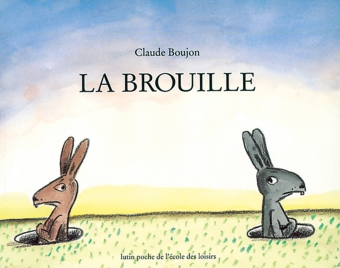
The Falling Out
Claude Boujon · L'École des loisirs
Two neighboring rabbits are arguing, until a
threat forces them to join forces. A story
full of humor that explores conflict,
cooperation, and reconciliation.
Questions to Ask the Child
"Why are the two rabbits arguing?
What ultimately helps them work together?"
Little Blue and Little Yellow
Leo Lionni · L'École des loisirs
Two friends meet again and kiss so hard that
their colors blend together. Their parents no longer
recognize them. A picture book that explores friendship,
transformation, and recognizing others.
Questions to Ask the Child
"Why don't their parents recognize them
anymore? What makes Little Blue remain
Little Blue, even when he changes his appearance?"
Four little no-big-deal spots
Jérôme Ruillier · Cup-and-ball
Little Square would like to join his friends, the Little
Circles, but he can't fit through the round door.
A story that encourages us to think about inclusion
and adapting our environment to accommodate differences.
Questions to Ask the Child
"Why can't Petit Carré come in?
Is it up to him to change, or can we find
another solution?"
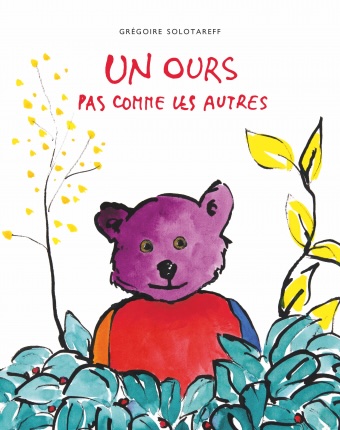
A Bear Like No Other
Grégoire Solotareff · L'École des loisirs
A book that invites us to reflect on how we view
those who are different from us and on the importance
of preserving our individuality, even as we seek
to find our place among others.
A resource for EVAR:
This picture book is among the materials recommended in
the 2026 companion booklet for the
Emotional and Relational Education program
for CE1, to address respect for
differences and each person’s uniqueness.
See the Éduscol booklet (p. 8)
.
Questions to Ask the Child
"What makes this bear different?
Do you have to look like everyone else
to be accepted?"
What if we followed up the reading with an activity? After reading a picture book, children can imagine a different ending, act out a scene with puppets, or work together to come up with a solution to the problem the characters are facing. The goal isn’t to find the “right answer,” but to share ideas and learn to listen to others’ perspectives.
Learning to live together begins in childhood, through the most ordinary experiences of daily life. It is built through the way we speak to one another, the way we embrace differences, the way we navigate disagreements, and the way we nurture the bonds that connect us. Every adult can contribute to this learning process—not by providing all the answers, but by offering children opportunities to explore, experiment, and build relationships with others.
Esclaibes International Schools
Learn About Esclaibes International Schools
Cooperation, respect for differences, and openness
toward others are among the values we
encourage every day in our bilingual schools,
through the Montessori method and active learning approaches.
Would you like to learn more about our educational approach
or find a school for your child?
Founder and Chief Executive Officer of Esclaibes International Schools.
A co-founder of Esclaibes International Schools, philosophy teacher, author, and speaker, Marie Robert places the act of passing on knowledge at the heart of her work. In particular, she explores how philosophy can shed light on education, everyday life, and our relationships with children.