How Do We Learn? The Four Pillars of Learning According to Stanislas Dehaene
Why does some knowledge remain etched in our memory while other knowledge fades quickly? Why can a child repeat an activity several times without getting bored? And why does understanding an explanation not always mean that the child has learned it?
How do we learn? Learning isn't simply a matter of receiving and memorizing information. It's an active process during which our brain builds, verifies, and adjusts its knowledge.
Research in cognitive science—particularly that of neuroscientist Stanislas Dehaene—provides a better understanding of this process. It highlights four key factors: attention, active engagement, error correction, and consolidation.
These four pillars of learning apply equally to young children, adolescents, and adults. They provide valuable insights into how we learn and help create conditions conducive to lasting learning.
How Do We Learn? What Cognitive Science Tells Us
A brain that formulates and tests hypotheses
Contrary to popular belief, our brain does not passively record all the information it receives. It constantly seeks to interpret its environment, anticipate what will happen, and verify its predictions.
Let’s imagine a young child looking at two rows, each containing five objects. In the first row, the objects are spaced farther apart than in the second. The child therefore perceives the first row as containing more items. However, upon counting the objects in each row, the child finds that their numbers are identical. This contrast between the child’s initial perception and the result of the count can gradually lead the child to revise their understanding of quantities.
This process, which Stanislas Dehaene describes in particular through the predictive brain model, is based on a continuous cycle: our brain formulates hypotheses, compares them with the results obtained, and gradually adjusts its mental representations.
Learning thrives on these successive adjustments. However, certain conditions must be met for the brain to process, understand, and retain information.
The Four Pillars of Learning: Complementary Mechanisms
In his book *Apprendre ! Les talents du cerveau, le défi des machines*(Learning ! The Brain’s Talents, the Challenge of Machines), Stanislas Dehaene identifies four key pillars that promote learning: attention, active engagement, feedback on errors, and consolidation. He also explores these mechanisms in his lectures on the cognitive foundations of academic learning at the Collège de France.
These mechanisms reinforce one another and help make learning more effective and lasting.
What are the four pillars of learning?
1. Attention: Selecting Important Information
Our brain constantly receives a vast amount of information. However, it cannot process all of it with the same intensity. Attention allows us to select the information relevant to a task and devote our cognitive resources to it.
When a child is learning to read, for example, he or she must gradually focus on the relationships between letters and sounds. Secondary stimuli may distract the child and unnecessarily tax his or her cognitive resources.
The environment plays an important role in fostering this focus. To better guide cognitive activity, we prioritize:
clear instructions;
a suitable workspace;
Minimizing unnecessary demands.
But it's not enough to simply ask a child to concentrate. As we explain in our article on children's concentration, this ability develops over time and requires support. The teacher helps the student by:
to identify what is important;
to maintain its goal;
to get back to work when he gets distracted.
This ability remains essential at any age, whether it involves learning a new concept in school or acquiring a professional skill.
Attention is thus a key prerequisite for learning. It becomes truly meaningful when accompanied by genuine cognitive activity: this is the role of the second pillar, active engagement.
2. Active Engagement: Learning Through Reflection and Action
Listening to an explanation or watching a demonstration can be helpful. But to learn effectively and retain the information, you also need to actively engage your mind.
Active engagement is, above all, about asking questions, formulating hypotheses, seeking solutions, and applying one's knowledge.
It does not necessarily mean being in motion or handling an object. A student who tries to solve a problem before discovering the solution engages in a different kind of cognitive work than one who simply copies down an answer.
Taking charge of your own learning also means:
explain a concept in one's own words;
retrieve information from memory;
asking yourself questions while reading, etc.
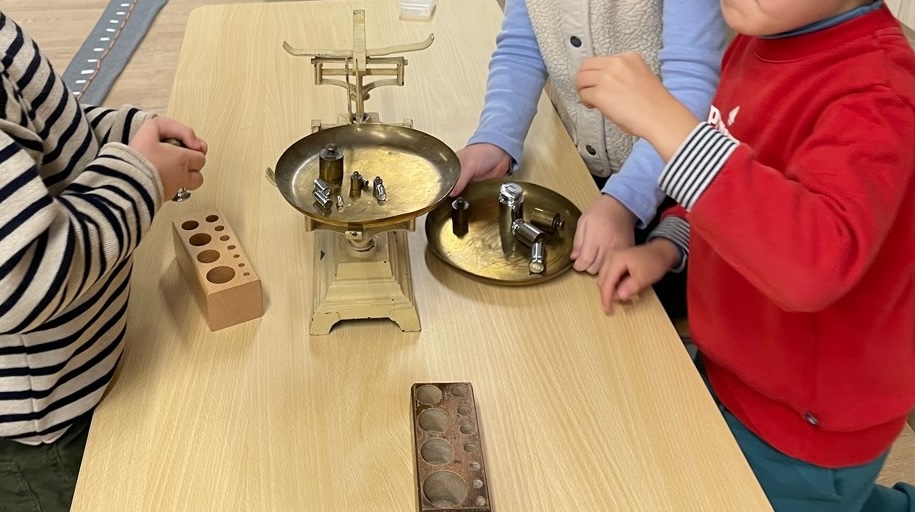
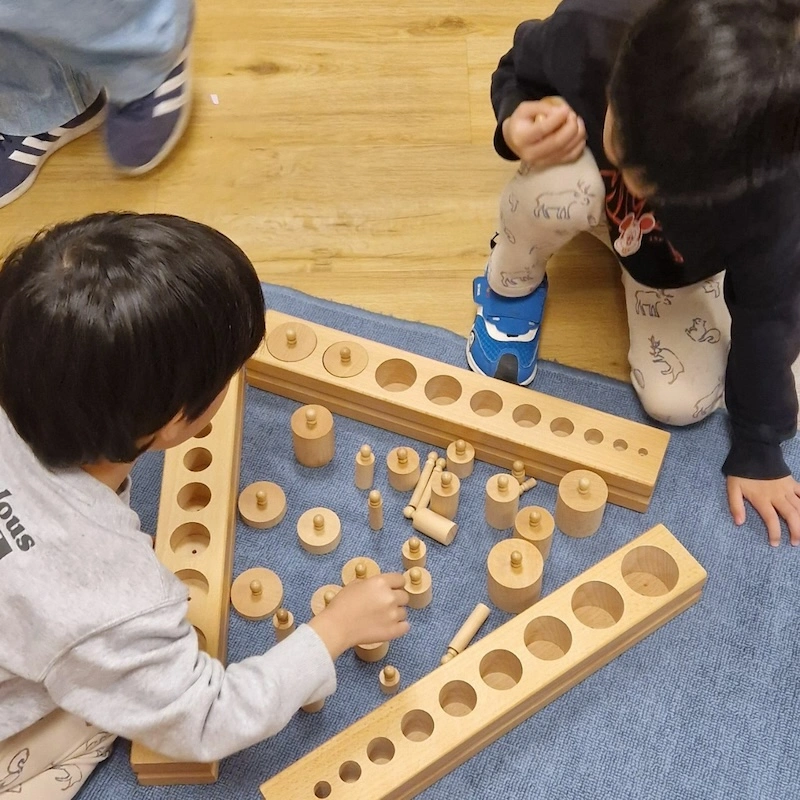
Active learning approaches foster this cognitive engagement. In the Montessori method, for example, children discover the decimal system using materials consisting of beads that represent units, tens, hundreds, and thousands. To perform an addition problem, they physically combine the quantities, make the necessary exchanges, and gradually build their understanding of the operations.
Project-based learning offers additional opportunities for active engagement: students seek solutions, make decisions, compare their ideas, and apply what they have learned to successfully complete a concrete project.
Through their explanations, demonstrations, and guidance, teachers foster this cognitive engagement:
it guides the discussion;
It provides the necessary knowledge;
It helps students organize their learning.
3. Learning from Mistakes: Understanding to Improve
Mistakes provide valuable information for learning. The gap between what we thought was correct and the actual result prompts us to reexamine our reasoning and adjust our understanding.
To learn from this mistake, the learner needs appropriate feedback. Constructive correction helps the learner:
to understand the cause of his mistake;
to identify the factors he had not taken into account;
to change its strategy.
Some materials based on the Montessori method incorporate error detection. With the red rods, for example, the child must arrange ten rods from longest to shortest. The child can then check their work using the smallest rod, whose length must correspond exactly to the gap between two consecutive rods. This provides the child with a way to identify any errors and correct their arrangement on their own.
When necessary, the teacher helps the child understand the source of his or her difficulties and consider an alternative approach. As part of individualized support, the teacher can step in at the right moment to help the child understand the source of his or her difficulties and consider an alternative approach.
At home, too, we can encourage this approach by inviting the child to reflect on their reasoning. For example, by asking them:
"How did you do that?"
"What makes you think that?"
"Could you try doing it another way?"
Mistakes thus become an opportunity to understand and grow, rather than an experience associated solely with failure.
4. Consolidation: Ensuring Long-Term Retention of Knowledge
Consolidation helps stabilize the knowledge and skills acquired, making them progressively more accessible and lasting. At the beginning of the learning process, a task may require a great deal of attention and effort. With practice and the reactivation of knowledge, certain procedures gradually become more accessible, or even automatic.
Let's take reading as an example. A beginning reader must devote a large portion of their cognitive resources to decoding. Once this skill becomes automatic, they can devote more resources to understanding the meaning of the text.
Consolidation relies, in particular, on several complementary mechanisms:
rehearsal and regular practice;
active retrieval of knowledge from memory;
spacing out learning over time;
Sleep, which helps stabilize and reorganize information stored in memory.
So, rather than reviewing a lesson several times in the same evening, it is often more effective to try to recall the information without any aids, and then revisit it at spaced intervals.
This approach can, in particular, be part of a spiral curriculum. In science or history, for example, a concept studied for the first time can be revisited at various points throughout the year and then explored in greater depth in new contexts. These regular revisits help students recall prior knowledge while gradually deepening their understanding.
Multigrade classrooms also provide opportunities to reinforce what students have learned. When a child explains a concept to a younger classmate, he or she must recall that knowledge, organize it, and rephrase it. This process of restating the information helps reinforce the child’s own learning.
Four Complementary Pillars for Sustainable Learning
The four pillars of learning work together and reinforce one another. Each contributes to a specific aspect of the learning process, but it is their interconnection that enables the development of solid, lasting knowledge.
Thus:
Attention combined with active engagement allows us to select relevant information and process it in depth.
Active engagement combined with feedback helps learners test their hypotheses, understand their mistakes, and adjust their reasoning.
Consolidation builds on this process through repetition, retrieval from memory, and the regular reactivation of knowledge.
These mechanisms reinforce one another throughout the learning process. They provide insights into how we learn, but also help us reflect on the strategies that enable us to make progress.
How Can We Learn Better by Applying Cognitive Science?
Learning to Learn: The Role of Metacognition
Asking yourself, “How do we learn?” is the first step toward better understanding how you learn. But simply knowing the four pillars of learning isn’t enough—you also have to learn how to put them into practice.
That is the whole point of metacognition—that is, our ability to reflect on our own ways of thinking and learning, to identify the strategies we use, and to adapt them to our needs.
A child who understands why it is helpful to test themselves rather than passively rereading their lesson can gradually choose more effective memorization strategies.
A teenager who recognizes situations in which his attention wanders can look for ways to better organize his work.
Similarly, an adult returning to school would benefit from understanding why it is better to space out study sessions rather than concentrate all their efforts into a single session.
Metacognition involves, among other things, asking oneself:
What did I really understand?
Can I explain this concept without looking at my notes?
What strategy led to my success?
What's still difficult?
How else could I go about it?
These questions help students gain the perspective they need to gradually become more independent in their learning.
How can you help your child learn better at home?
The four pillars of learning can also guide parents as they support their children in their explorations or homework. The goal is to help children think critically, seek solutions, and apply their knowledge, all while keeping learning fun.
Here are a few concrete examples:
01
Vary the ways you study
To memorize words, children can spell them,
write them down, type them, or practice
with an interactive exercise. This variety
of activities allows them to engage their knowledge
in different ways, as long as they stay focused
on the learning objective.
02
Switching Roles
After a history lesson, why not ask
the child to come up with a few questions to ask
their parents? Then it’s up to the child to check the answers,
fill in any gaps, and explain what they’ve learned.
03
Have students explain their reasoning
In mental math, asking, “How did you get
that answer?” helps children become
aware of the strategies they use. Comparing
different approaches can also help them
discover new ones.
04
Encourage the search for solutions
From a very young age, everyday situations
provide opportunities for reflection. When setting
the table, for example, a child might figure out
how to bring three forks in a single trip
rather than making multiple trips back and forth.
These conversations help parents better understand how their child thinks, while encouraging the child to gradually become more independent.
Just a few minutes of interaction, a well-chosen question, or a small challenge can turn study time into a genuine opportunity for shared reflection.
How do the cognitive sciences enrich active learning approaches?
The four pillars of learning describe cognitive mechanisms common to all human beings. They come into play regardless of the learner’s age, the subject being studied, or the language used. Cognitive science thus provides a better understanding of the conditions that facilitate the acquisition and retention of knowledge.
Active teaching methods, such as those developed by Maria Montessori and Célestin Freinet, place a strong emphasis on experimentation, cooperation, autonomy, and student engagement. These practices can engage several mechanisms described by Stanislas Dehaene. Their effectiveness, however, depends on how they are designed and supported, on students’ prior knowledge, and on the learning objectives being pursued.
At Esclaibes International Schools, we practice an enriched Montessori approach that incorporates other principles from active learning methods and draws on insights from cognitive science.
This approach is particularly evident in the Cogni'classe program, which is being implemented with fourth- and fifth-grade students and middle school students in Marseille 12. The teaching teams focus on five key areas: memorization, attention, comprehension, active engagement, and metacognition.
In practice, this can take the form of memory retrieval exercises, short quizzes, spaced repetition, or discussions about learning strategies. Students are thus gradually encouraged to ask themselves: What have I retained? How did I succeed? Why does this strategy work? How could I approach this differently?
In our bilingual schools, these mechanisms are at work in learning activities conducted in both French and English. Attention, active engagement, error correction, and reinforcement support the acquisition of knowledge and skills in both languages.
Cognitive science thus informs pedagogical decisions without replacing educational goals, the content taught, or the relationship between the teacher and students.
Understanding how we learn ultimately allows us to better support each learner, but also to gradually empower them to take charge of their own learning.
Director of Academic Affairs for the Esclaibes International Schools Group
As Academic Director of Esclaibes International Schools, Amanda Ceselia supports the staff in the areas of learning, inclusion, and child development. Trained in the Montessori approach for children ages 0 to 12, she also serves as a trainer.